
Calm on Paper: How Young Ugandans Experienced the 2026 Election
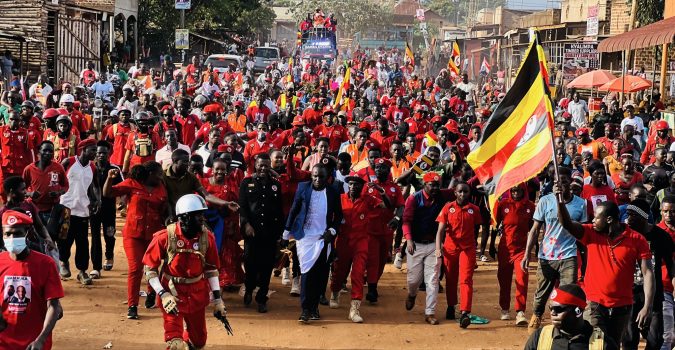
In its preliminary statement on Uganda’s 2026 elections, the African Union election observation mission said stakeholders considered the January 15 vote “calm compared to the 2021 elections.”
On paper, the picture appears straightforward. Ugandans went to the polls on the same day to elect both the president and members of parliament. According to the official result announced by the Electoral Commission, President Yoweri Museveni of the ruling party, the National Resistance Movement (NRM), won a seventh elected term with 71.65 percent of the vote, while opposition leader Robert Kyagulanyi – better known as Bobi Wine – received 24.72 percent. Uganda’s parliament is made up not only of directly elected constituency MPs, but also district women representatives and representatives of special interest groups, including youth.
That is the formal story of the election. Three young Ugandans interviewed for this article tell a different one.
From Intimidation to Victory – The Story of the Youngest Elected MP in Uganda
Robert Maseruka, the youngest elected MP in Uganda and a politician from the opposition National Unity Platform (NUP), did not come to parliament through one of the five youth-reserved seats. He won in mainstream electoral competition instead – a rare breakthrough for a young opposition candidate.
For Maseruka, the 2026 election was never free or fair. Throughout the process, and even after nomination, he says, opposition candidates continued to face intimidation. Some of his colleagues disappeared, and others were imprisoned on unclear charges. What defined the process, in his view, was psychological oppression, as fear itself became part of the campaign.
“These elections were not free and fair,” he says. “You can’t run away from intimidation in Uganda, whether you are in office or not.”
And yet he kept going. Asked what made him continue, Maseruka’s answer is blunt. “It’s not enough if it doesn’t scare the hell out of you,” he laughs. What sustained him, he says, was the support he felt from ordinary people. “The love of the people kept us going every day.”
A month before the election his team had begun to feel victory was possible. They printed flyers, posters, and other campaign materials, held rallies, and tried to meet voters however they could – online where possible, and in person where it was not. “People who have access to the internet will find us there,” he says in essence, “and those who do not, we will meet at their homes, mosques and schools.”
His constituency was already largely opposition-leaning, and Maseruka says he drew strong support especially from younger voters. Older voters were sometimes more skeptical, with some believing leadership should belong to someone much older. But by the end of the campaign, he says, he was no longer in doubt. He won with 19,693 votes.
Maseruka insists his victory was never only about age. Legally, he says, he represents all the people in his constituency, not only the young. But his election still carries symbolic weight in a country where youth political participation is often channeled through special structures rather than mainstream power.
His priorities in office are practical ones: service delivery, accountability, and bringing leadership closer to ordinary people. His constituency lies near the capital, yet many residents still lack basic necessities. “People can’t love their country if they can’t have access to water, to electricity and to education,” he says.
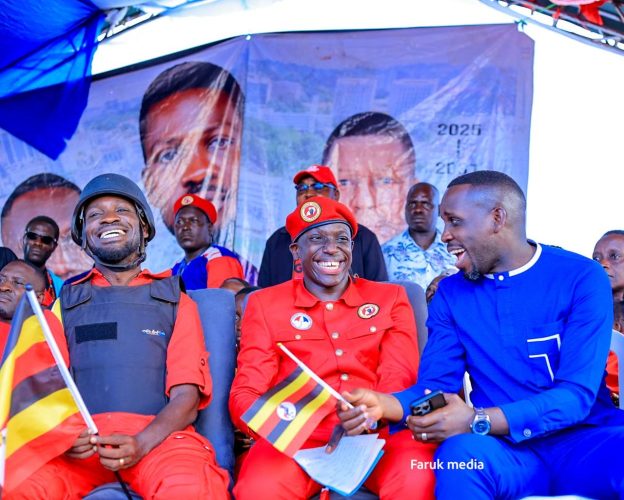
Maseruka celebrating election success.
Barriers to meaningful representation
According to the Uganda Bureau of Statistics, people aged 15 to 30 make up about 31 percent of the population – around 14 million people – while more than 70 percent of Ugandans are under 30. This leaves no question as to how central young people are to the country’s political future.
Yet demographic weight does not automatically translate into political power. That is where Rodney Adroni places his criticism. Adroni, the Speaker of Uganda’s National Youth Parliament, does not argue that Uganda lacks structures for youth participation. In addition to recognizing youth as a special interest group and reserving five parliamentary seats for them, Uganda maintains a National Youth Council and a National Youth Parliament that operates through subregional youth parliaments and engages in issue-based advocacy.
In Adroni’s view, the problem is deeper: “What I think is lacking is meaningful youth representation,” he says.
According to Adroni, the young people who make it into formal politics are too often absorbed into the ruling system rather than acting independently. The special representation slots are meant to bring young voices into national decision-making, but in practice they are often shaped by personal networks, patronage, and loyalty to the ruling party. Many youth aspirants, he suggests, already have ties to politically connected figures. Instead of opening politics to a wider generation, the system can end up reproducing the same hierarchy through younger faces.
Of the five youth MPs in Parliament, four represent Uganda’s regions and one is elected separately at the national level. In 2026, the ruling NRM won all four regional youth seats, while the remaining national youth seat went to an independent. Reporting on the contests also pointed to the continued weight on political family networks. In the Western race, for example, the winner, Mwine Tumwebaze, was identified in press coverage as the son of State Minister Bright Rwamirama.
Money, Adroni argues, is another major part of the problem. In his words, the “monetarization and commercialization” of elections is behind the erosion of meaningful representation.
Even the African Union observer mission noted this in its preliminary statement, recording that political parties cited high nomination fees as a barrier preventing young people from contesting competitive seats. But according to the interviewees, the cost of entering politics goes far beyond official fees.
As Maseruka puts it, campaigning also means constantly spending money on the ground. He suggests there is a wider culture in which candidates are expected to “leave some money,” buy food and drinks, and cater to the mentality that “before you get money from the MP position, you should leave us our share.” In that system, money does not just support a campaign; it helps buy political access itself.
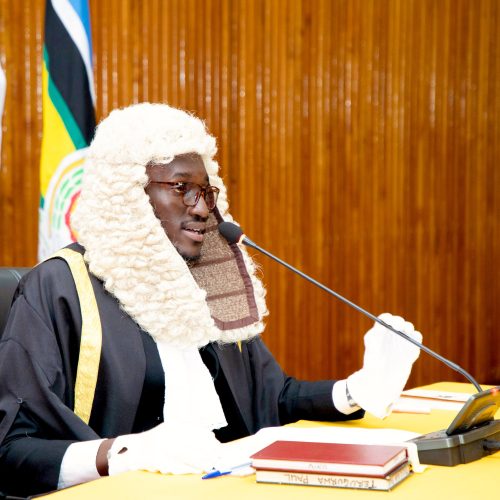
The Speaker of Uganda’s National Youth Parliament Rodney Adroni in action.
Shrinking political space, and youth as instruments of violence
Kabuulwa Muzafaluh, Communications Officer at Prospect Initiative, a youth-focused civic organization, also challenges the idea that Uganda’s 2026 election was truly peaceful. In his view, violence did not affect only the opposition. It also touched the ruling party. But whatever form it took, young people were often at the center of it.
“When anyone wants to do violence to another person, they use the youth,” he says in essence – through manipulation, financial incentives, and political mobilization.
Muzafaluh also points to tensions inside the opposition itself. Internal fighting within the NUP, he says, created conflict among supporters, many of whom were young. That meant young people were not only excluded from power but also drawn into struggles that were bigger than themselves.
During the first months of the election period there were assemblies of peace, but Muzafaluh sees them as performative. This time, the ruling party relied less on visible violence and more on state machinery and other less obvious means to suppress the opposition.
The result, he argues, was a more structural form of oppression. Opposition parties faced shrinking access to funds and were forced into public fundraising just to stay in the race. “The playing field was uneven long before election day,” he summarizes.
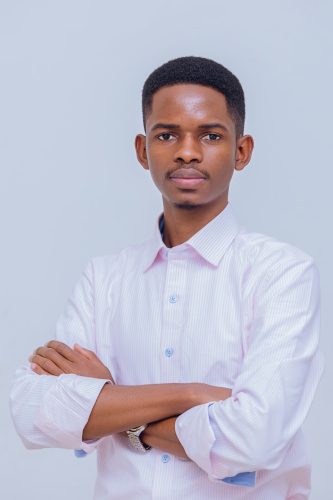
Kabuulwa Muzafaluh of Prospect Initiative Speaks of Youth as Instruments of Violence.
Still, neither Maseruka nor Adroni speaks without hope. Maseruka’s message is simple: “It must get better. This is the rising time for our country to get better.”
Adroni, too, sees both frustration and possibility. Maseruka’s election, he says, was a huge win. When young people challenge the status quo and run in mainstream politics, he believes, the number of young representatives will gradually grow.
But that change will require more than symbolic inclusion. Meaningful representation, Adroni argues, depends on reforms that make politics accessible to those without money, patronage, or powerful connections – and on broader economic reforms that give young people greater freedom to shape their own future.
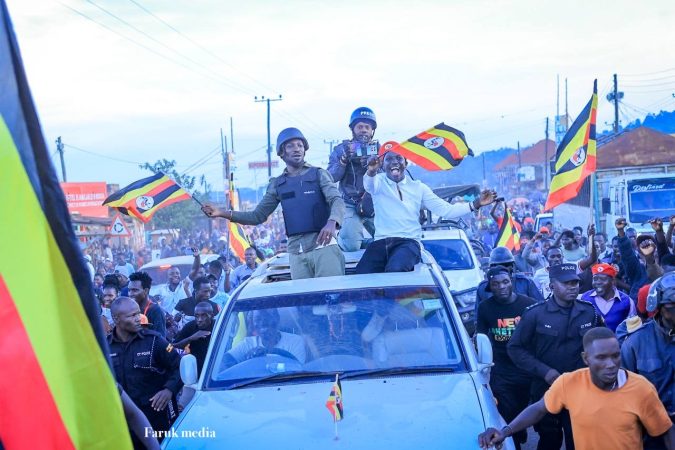
Maseruka campaigning during election season.
Sources:
President Yoweri Museveni Wins Seventh Term: Electoral Commission | Uganda Elections 2026